Research: Every Ship, Port, and Sailing — Cross-Referenced
The whole fleet, every port, every sailing — searchable and linked together. Here's the research surface that replaces six browser tabs.
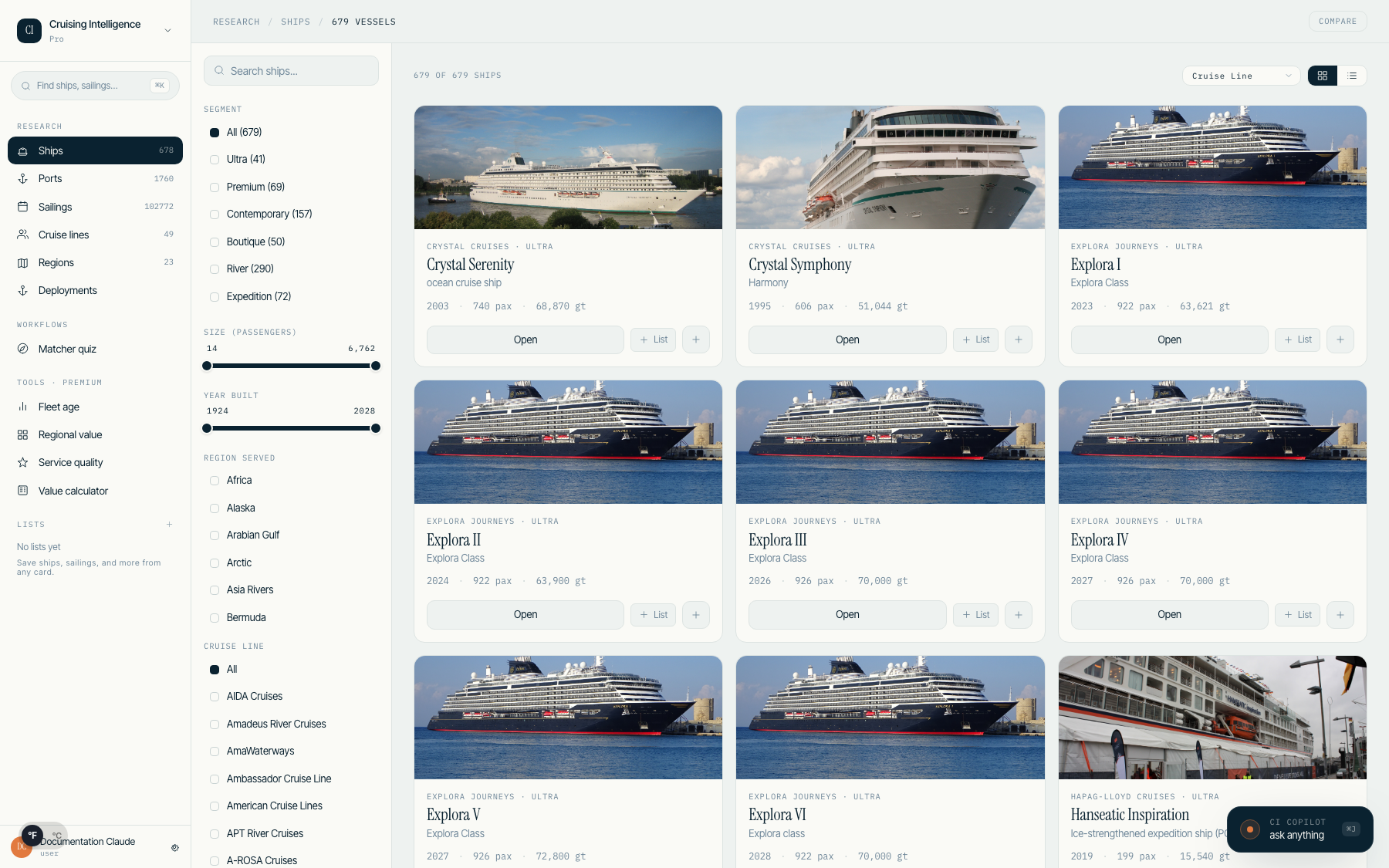
The consultation starts here
Your client asks about a ship. You open the cruise line's site. Then a review site. Then a deck-plan PDF. Then a booking engine to check sailings. Twenty minutes later you have four tabs and half an answer.
The Research surface is built to end that. Every ship, port, sailing, cruise line, and region lives in one place — and they're cross-referenced, so pulling up a ship also surfaces its line's tier, typical demographics, and service scores.
What you can actually search
Ships — the full fleet with tonnage, passenger capacity, crew count, dining venues, cabin categories, and amenities. Filter by tier, cruise line, size, or year built. Sort by whatever metric matters for the client in front of you.
Ports — historical weather patterns, sea conditions, air quality, and crowding. Know before your client asks whether Santorini will be swamped in July or whether the Inside Passage is calm in September.
Sailings — every itinerary, searchable by region, line, date, and duration.
Cruise lines — active lines with tier, fleet age, and service quality.
Regions — cruise regions with seasonal ship-deployment data.
Why cross-referencing matters
A ship isn't a fact in isolation. It's a fact in context. When the data is linked, "tell me about this ship" becomes "tell me about this ship for my client" — because the tier, the demographics, and the service profile are already attached.
That's the difference between a database and a research tool.
Browse the full fleet on your 14-day free trial. No card required.