Fleet Age: What a Line's Hardware Tells You That Marketing Won't
A fleet's age reveals whether a line is reinvesting or coasting. How to read fleet-age data to set client expectations before they board.
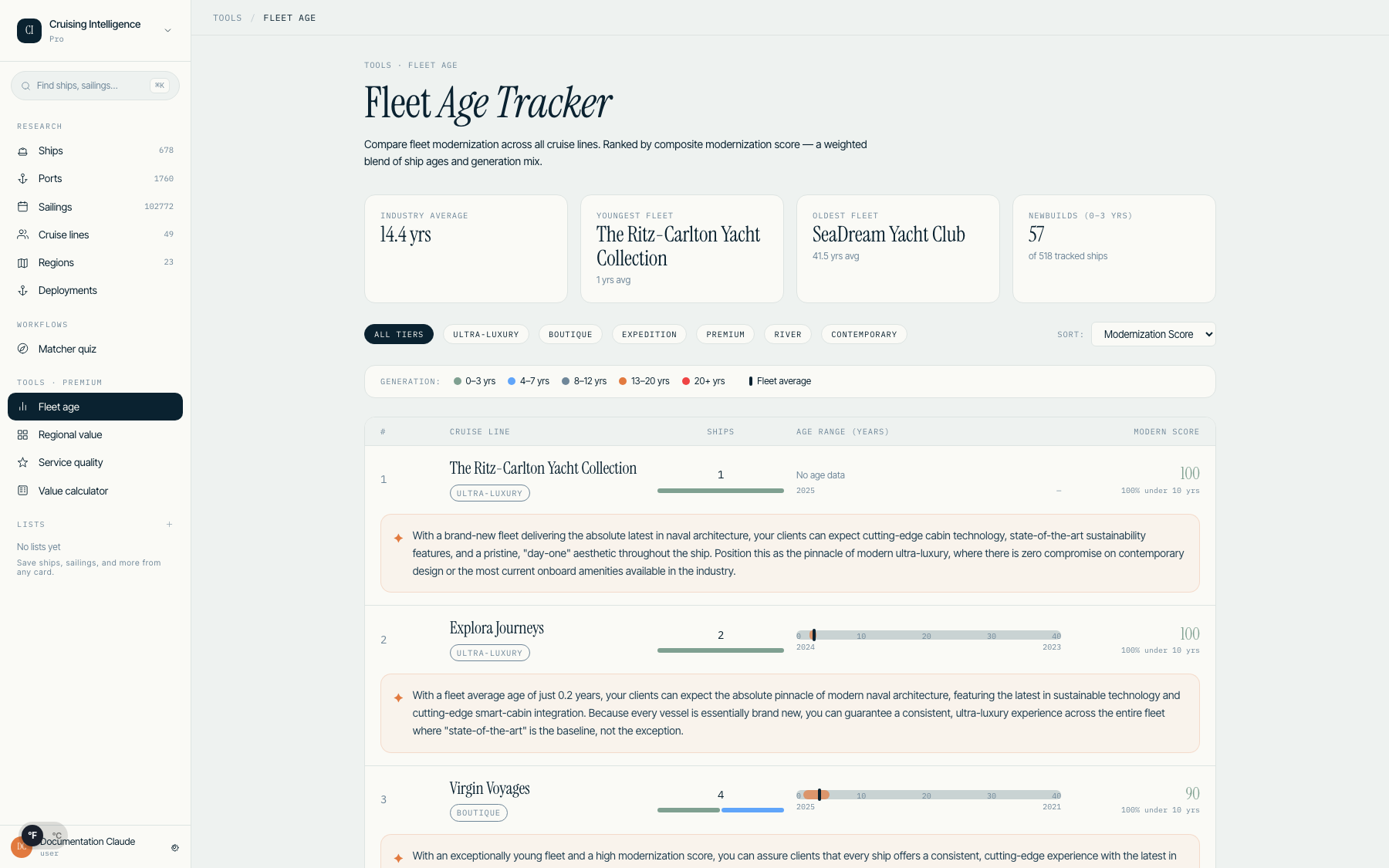
The number behind the brochure
A cruise line's marketing shows you the newest ship. It doesn't show you the average age of the whole fleet.
Fleet age tells you something the brochure never will: whether the company is reinvesting in hardware or coasting on decades-old hulls. Newer ships mean updated cabin designs, better energy efficiency, and contemporary entertainment venues. Older fleets may signal value pricing — or deferred maintenance.
What the tool shows
Age distribution — a histogram of how many ships fall into each bracket: 0–5 years, 5–10, 10–15, 15–20, 20+.
Average & median — exact average and median fleet age per line, sortable across every line.
Newest & oldest — the youngest and oldest active ship in each fleet, with year built and ship name.
Trend indicator — whether the line's fleet is getting younger, older, or staying flat based on recent newbuilds and retirements.
How to use it
Set expectations before the client boards. A family expecting water parks and surf simulators should know their ship was built in 2004. A couple booking ultra-luxury should see whether the line has launched anything in the last five years.
See at a glance whether a line's fleet skews young (Icon class, Oasis class) or whether a boutique line is running ships built in the 1990s. Compare average age, median age, and the spread from newest to oldest.
The value
Fleet age is a proxy for investment. A line launching newbuilds is a line betting on its future. A line stretching 25-year-old hulls is making a different statement. Your client deserves to know which one they're booking.
Compare fleet age across every major line on your 14-day free trial. No card required.