How to Run a 15-Minute Data-Backed Cruise Consultation
A structured consultation with real data closes faster than an hour of conversation. Here's the exact 5-step framework.
Most Consultations Are Too Long and Too Vague
A typical cruise consultation goes like this: 45 minutes of conversation, lots of "that sounds nice," a promise to "send some options," and then 2 hours of research before you can follow up.
Here's a better approach: a 15-minute structured consultation where every minute produces data your client can see.
The 5-Step Framework
Step 1: Profile (3 minutes)
Ask 5 questions:
- Who's traveling? (couple, family, solo, multigenerational)
- What's your budget range per person?
- What matters most — relaxation, adventure, food, or culture?
- Any destinations you're drawn to?
- When are you thinking?
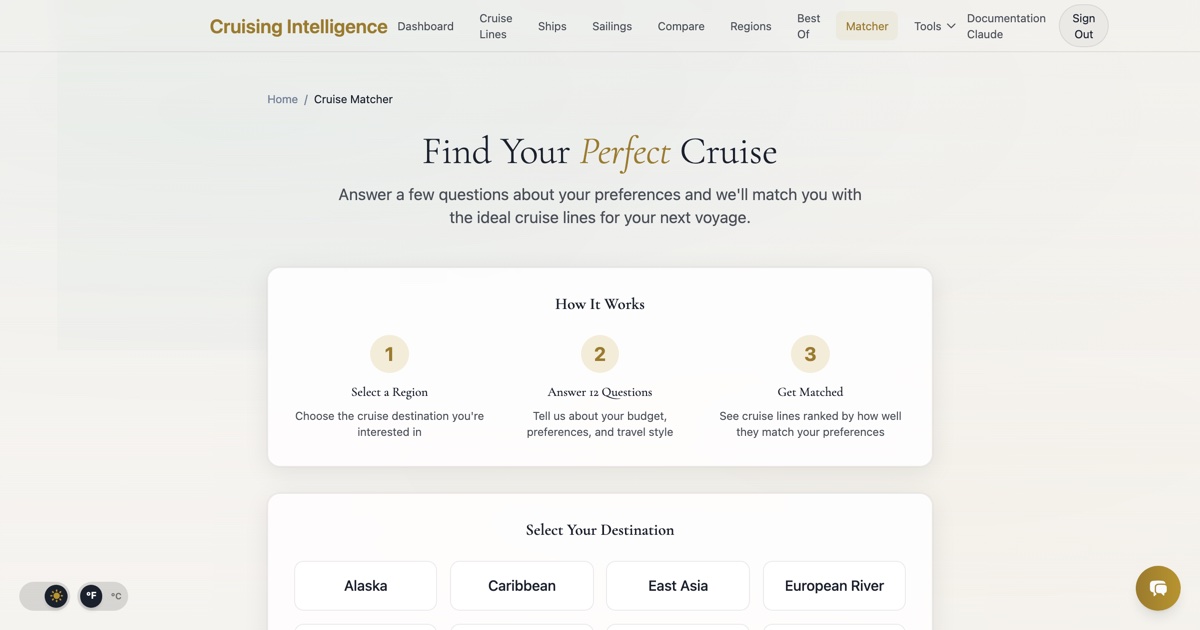
While they answer, open the Cruise Matcher. Their answers map directly to the quiz parameters. You don't need to complete the full quiz — 5 questions give you enough to filter.
Step 2: Match (2 minutes)
Based on their answers, run a quick demographic search. If they said "couple, mid-budget, loves food, Mediterranean, October":
Ask the AI Chat: "Best cruise lines for a food-loving couple, moderate budget, Mediterranean in October."
In 10 seconds, you have ranked recommendations with match reasoning. Share your screen or read the top 3.
"Based on what you've told me, here are the three lines I'd focus on: Oceania for the culinary program, Celebrity for the modern ship experience, and Viking for the all-inclusive value. Let me show you why."
Step 3: Compare (3 minutes)
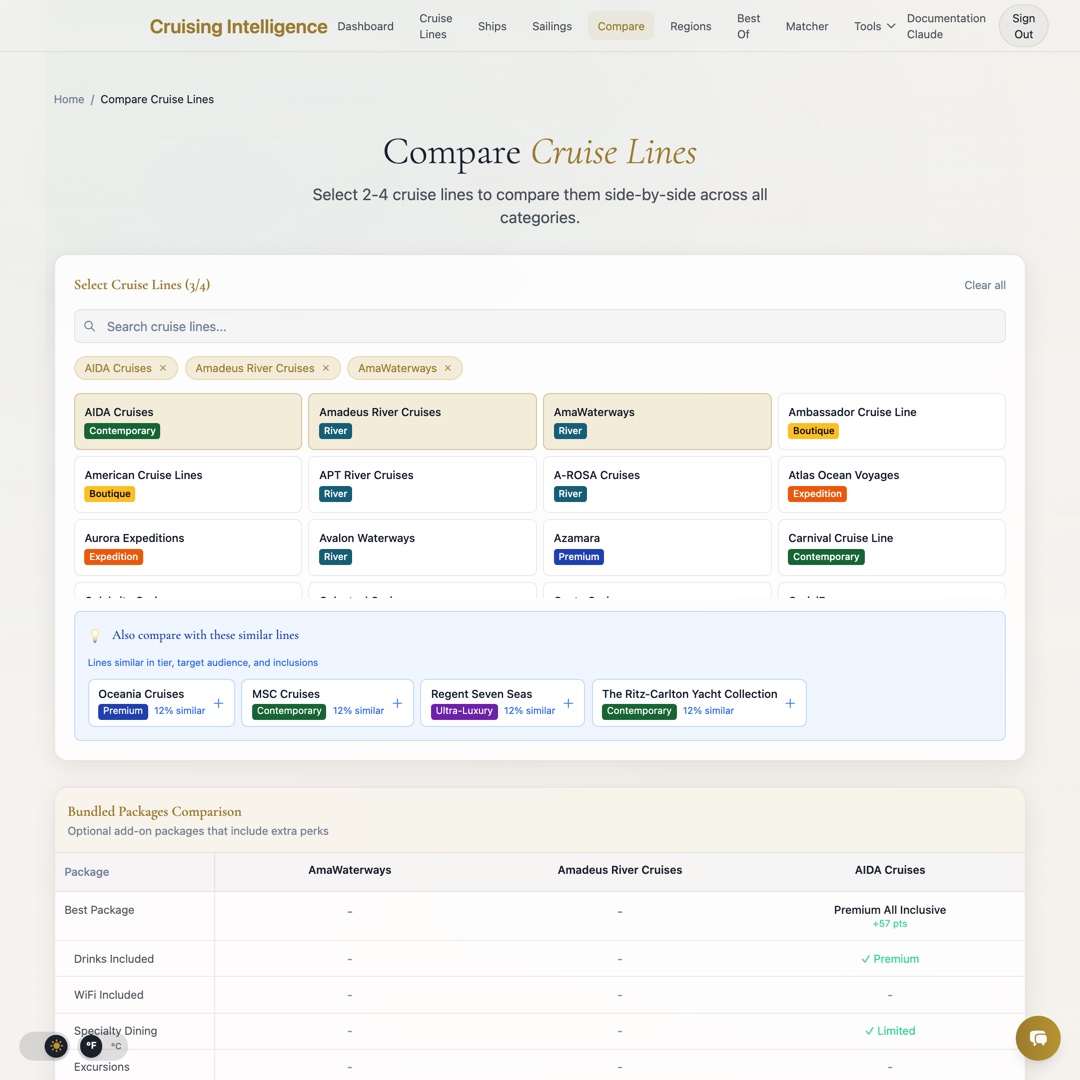
Pull up a side-by-side comparison of those 3 lines. Show them:
- CIC ratings (the composite quality score)
- What's included in the base fare
- Fleet age (newer ships vs classic)
- Service quality ratios
"Viking includes everything — beverages, gratuities, WiFi, excursions. Celebrity has a lower base fare but beverages and WiFi are extra. When you factor in inclusions, Viking's effective daily rate is actually comparable. Oceania is the premium option — all-inclusive with the best dining at sea."
The client sees real data, not brochure promises. This builds trust.
Step 4: Show the Itinerary (4 minutes)
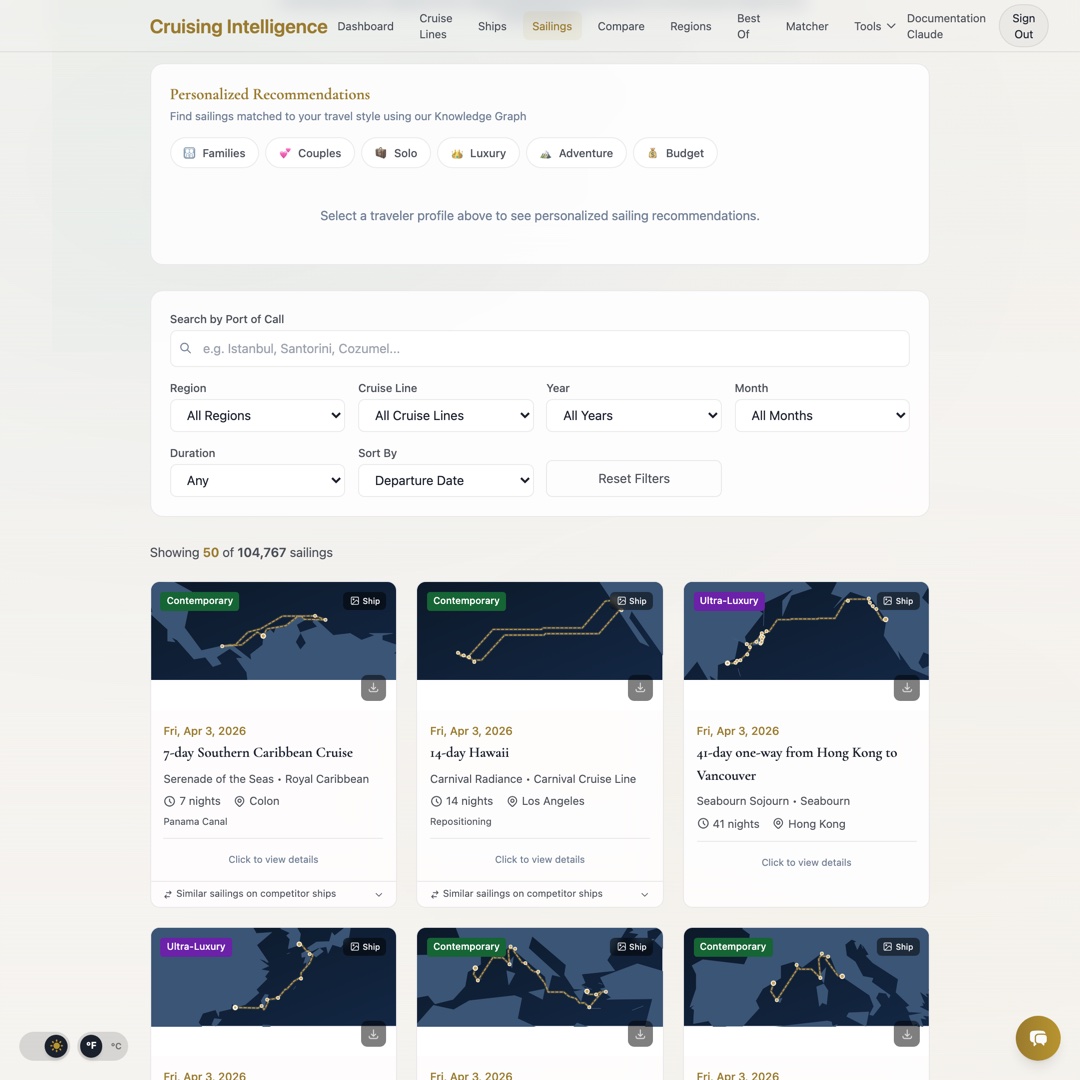
Search for itineraries matching their criteria. Show them 2-3 options with:
- Route map (the actual path the ship takes)
- Duration and departure port
- Port-by-port conditions (weather in October: 20-25°C, calm seas)
- Crowding levels ("This itinerary arrives in Santorini on a day with only 2 other ships")
"Here's the 10-day Mediterranean on Viking Star. You start in Barcelona, hit the Italian coast, cross to Greece, and end in Athens. October weather is ideal — warm but not hot, calm seas, and the ports are much less crowded than summer."
Step 5: Recommend and Close (3 minutes)
By now, the client has seen data at every step. Make your recommendation specific:
"Based on everything we discussed, I'd recommend the October 10 sailing on Viking Star. It's all-inclusive, the ports are quiet in October, the dining program is exceptional, and at your budget it's the best value of the three. Want me to check cabin availability?"
That's a close. Not "I'll send you some options." A specific recommendation with a specific next step.
Why 15 Minutes Works
- Minute 1-3: You're listening (client feels heard)
- Minute 4-5: You're matching (client sees you're using tools, not guessing)
- Minute 6-8: You're comparing (client sees objective data)
- Minute 9-12: You're showing the product (client visualizes the trip)
- Minute 13-15: You're recommending (client is ready to decide)
Every step produces visible evidence of your expertise. The client doesn't need to trust your opinion — they can see the data.
The Follow-Up Is Already Done
After a data-backed consultation, your follow-up email writes itself:
"Hi Sarah — great talking today! As discussed, here's the Viking Star Oct 10 Mediterranean sailing. Attached is the itinerary with port conditions and a packing guide based on October weather data. The all-inclusive rate is $X per person. Cabin availability is strong right now but October sailings fill fast. Let me know if you'd like to hold a cabin."
That email takes 3 minutes because you already did the research live during the call.
Try it with your next inquiry: cruisingintelligence.com.