How to Overcome the 5 Most Common Cruise Objections Using Data
Every travel advisor hears the same objections: too expensive, I'll get seasick, ports are too crowded. Here's how to counter each one with real data instead of reassurance.
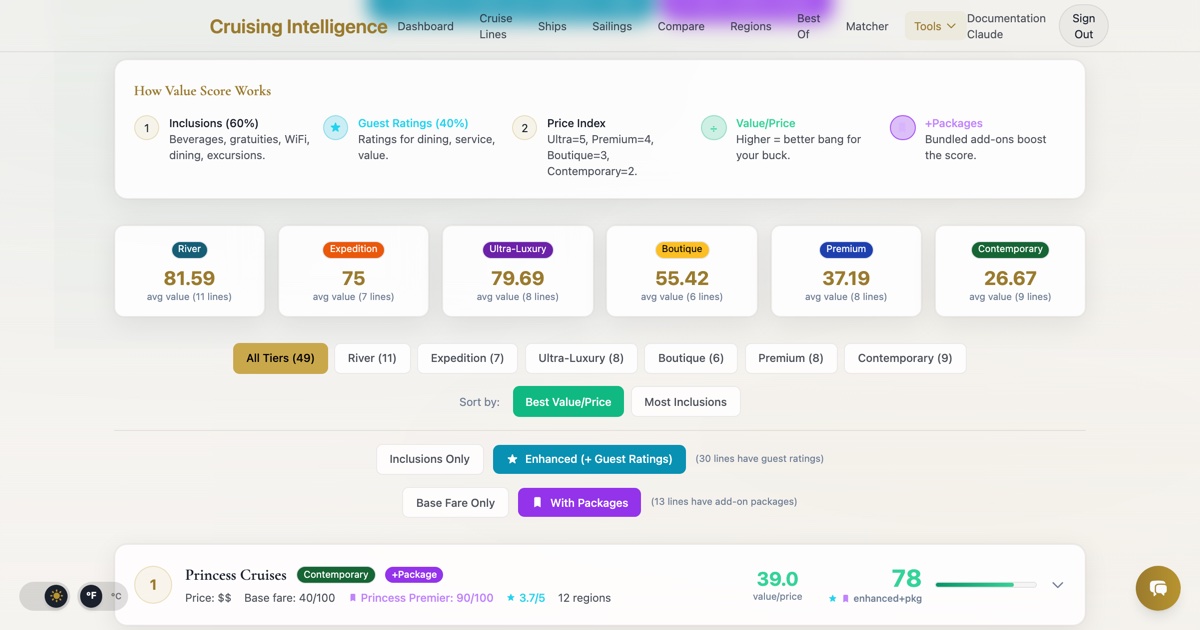
Reassurance Doesn't Close Sales. Data Does.
When a client says "I heard the ports are really crowded," most advisors say: "Oh, it's not that bad! You'll have a great time."
That's reassurance. It doesn't address the concern. And it doesn't build trust.
What if instead you said: "Grand Turk on March 18 has 6 ships scheduled — about 18,000 passengers. But on March 22, only 2 ships are in port. Let me find you an itinerary that arrives on the quieter day."
That's data. And it makes you the expert.
Here are the 5 most common cruise objections and how to handle each one with real numbers.
Objection 1: "Cruises are too expensive"
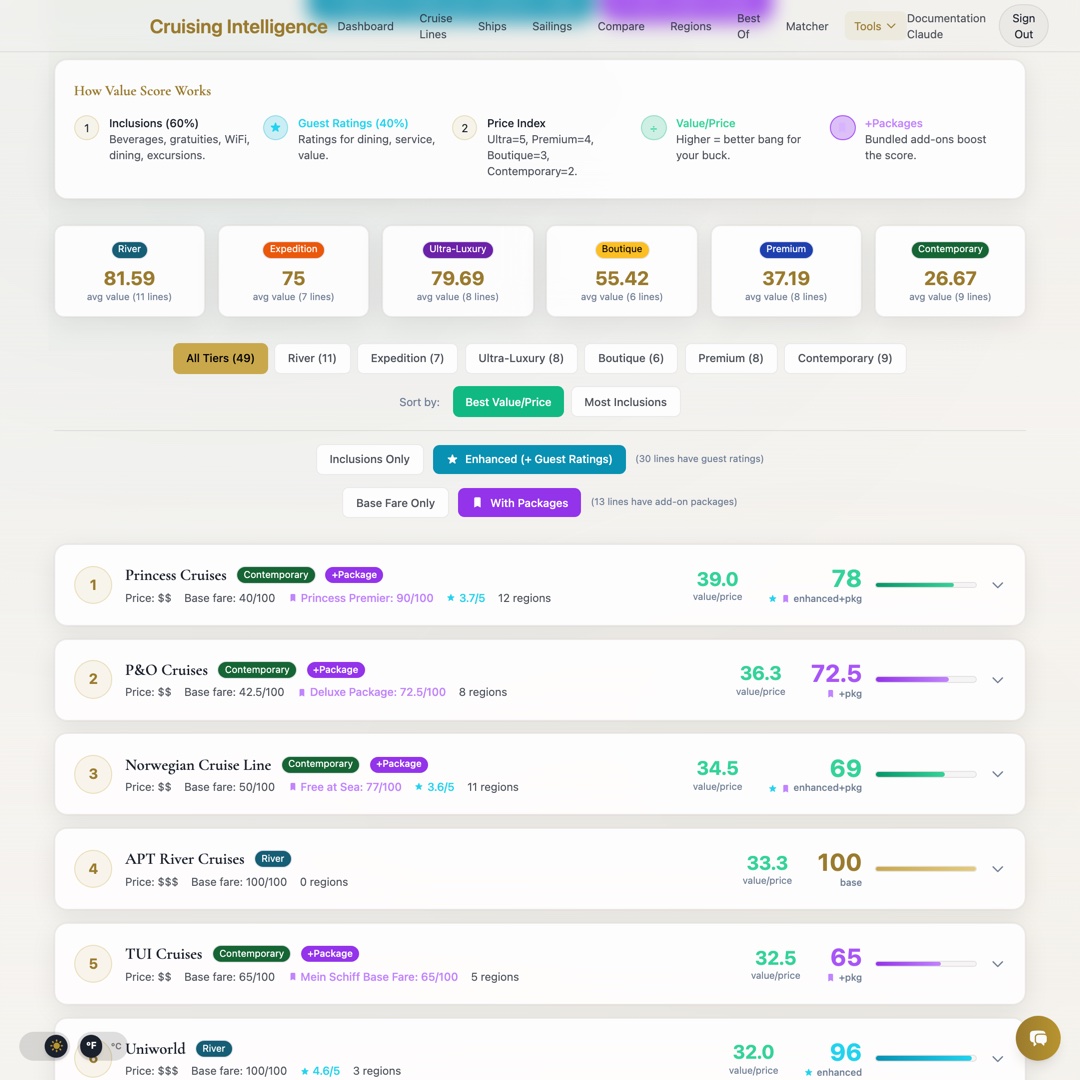
The data response: Pull up the Value Calculator.
"Let me show you what's actually included. Viking scores 85/100 on our inclusion index — beverages, gratuities, WiFi, specialty dining, and excursions are all in the base fare. When you factor those in, the effective daily rate is actually lower than a Caribbean resort where you'd pay for all of that separately."
Why it works: Most clients compare the cruise sticker price against a hotel room price without accounting for inclusions. The Value Calculator makes the true cost visible.
Bonus: Show them two cruise lines side by side — one with high base fare but all-inclusive, one with lower fare but everything extra. The "expensive" option often wins on total value.
Objection 2: "I'll get seasick"
The data response: Pull up route corridor data.
"I understand that concern. Let me check the actual sea conditions for the routes you're considering. This Mediterranean itinerary in September has average wave heights of 0.6 meters — that's glassy calm. And the ship I'd recommend, Celebrity Edge at 129,500 tons, has stabilizers that handle even moderate seas. Our data rates the seasickness risk on this route as 'low' for September."
Why it works: Vague reassurance ("modern ships don't rock") doesn't work. Specific wave height data and ship tonnage numbers do. You're replacing fear with facts.
The AI Chat shortcut: Ask: "My client gets seasick. Best Mediterranean cruise in September with calm seas?" It cross-references ship size, monthly wave data, and seasickness risk automatically.
Objection 3: "Ports are too crowded"
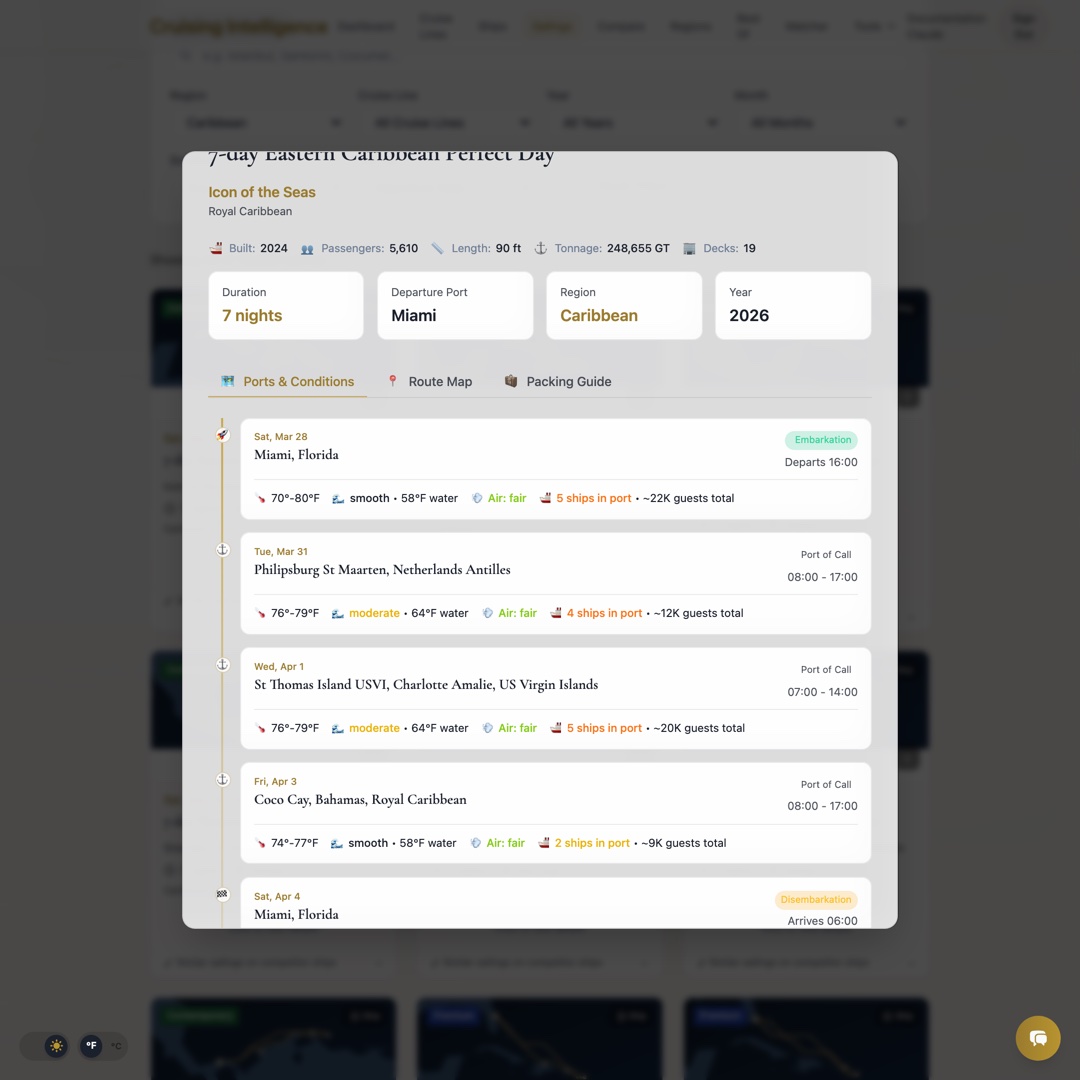
The data response: Open an itinerary and show the port crowding data.
"You're right that some ports get very busy. But look at this — your Cozumel stop on March 15 only has 2 other ships in port. That's about 6,000 total passengers. Compare that to March 18, which has 7 ships and 21,000 people. I specifically chose this sailing because the port days are quieter."
Why it works: You're not denying the problem. You're showing that you chose this specific itinerary because you checked the crowding data. That's advisor value that the client can't get booking direct.
Objection 4: "I'll be bored on the ship"
The data response: Pull up the ship detail page.
"Let me show you what's on this ship. Icon of the Seas has 40 dining venues, 7 pools, a surf simulator, a zip line, an ice skating rink, and a 17-deck water park. Plus 28 bars. The ship itself is a destination — most guests don't get to everything in a 7-day cruise."
Why it works: Listing amenities by category (dining: 40, bars: 28, pools: 7, unique features: 15 world firsts) makes the scale tangible. Numbers beat adjectives.
Objection 5: "I can book it myself for cheaper"
The data response: This is where you demonstrate value the client cannot replicate.
"You absolutely can book directly. But here's what you won't get: I checked port crowding for every day of this itinerary — you'll avoid the busiest days. I verified the sea conditions for your travel dates — September is the calmest month on this route. I compared 3 cruise lines on 30 demographic dimensions to make sure this one fits your travel style. And I can tell you that the 7-day version of this route extends to a 10-day with 3 additional ports if you want more time."
Why it works: You're not competing on price. You're showing the invisible work you did — work that requires tools the client doesn't have. Port crowding data. Wave height analysis. Demographic profiling. Route corridor intelligence.
That's why they pay you.
The Pattern
Every objection follows the same formula:
- Acknowledge — "You're right to think about that."
- Show data — Pull up the specific numbers.
- Reframe — "That's exactly why I chose this option for you."
Data doesn't argue. It informs. And informed clients book.
Start building your data-backed objection responses at cruisingintelligence.com.